Best Time for Gorilla Trekking in Rwanda
Rwanda is one of the few places where you can go gorilla trekking throughout the year. The mountain gorillas do not migrate away from Volcanoes National Park when the weather changes, so there is no single month when gorilla sightings suddenly become possible or impossible.
What does change is the experience of trekking through the forest.
Rain can make trails muddy and slippery, while the drier months generally make walking easier. On the other hand, Rwanda’s rainy seasons bring lush vegetation and can sometimes offer a quieter atmosphere for travellers who do not mind getting wet.
So, what is the best time for gorilla trekking in Rwanda? For most visitors, the drier months from June to mid-September are the easiest choice. However, the best month ultimately depends on your priorities, budget and tolerance for rain.
Rwanda’s Gorilla Trekking Seasons
Rwanda has two main rainy seasons and two relatively drier periods.
According to Visit Rwanda, the main rainy seasons run from mid-February to May and mid-September to mid-December. The drier period is generally June to mid-September, although occasional light rainfall can still occur.
The weather around Volcanoes National Park is cooler than much of Rwanda because of the high elevation. Conditions can also change quickly in the mountains, so even during a generally dry month, you should be prepared for rain.
June to Mid-September: The Popular Dry Season
If you want the most straightforward answer to when to go, June to mid-September is usually the best period for gorilla trekking in Rwanda.
Visit Rwanda describes this as the country’s dry season, when there is light cloud cover and occasional light rainfall. Roads and paths also tend to be easier to navigate.
For gorilla trekking, that can make a noticeable difference.
The trails around Volcanoes National Park can be steep, uneven and muddy. Drier conditions generally mean less mud underfoot and a more comfortable hike, especially if you are not an experienced trekker.
This period is particularly attractive if you are travelling with a fixed itinerary and do not want rain to complicate other activities around Volcanoes National Park.
The downside is that this is a popular time to travel, so accommodation and gorilla permits should be arranged well in advance.
December to Mid-February: Another Good Option
The period from December to mid-February can also be a good choice for gorilla trekking.
Although Rwanda does not have a completely predictable dry season, these months are generally more favourable than the main rainy periods.
The advantage is that you can enjoy relatively manageable trekking conditions while avoiding some of the wetter months.
If your travel schedule falls during this period, there is no reason to postpone your gorilla safari simply because you cannot travel between June and September.
Mid-September to December: The Short Rains
Rainfall increases again from around mid-September.
This does not mean that you cannot trek. Gorilla tracking continues during the rainy season, and the gorillas remain in their natural habitat.
The main difference is the condition of the trail.
You may encounter wet vegetation, muddy paths and slippery sections. A waterproof jacket, sturdy hiking shoes and gaiters become particularly useful. Visit Rwanda specifically recommends sturdy clothing and solid walking shoes, with gaiters and a lightweight waterproof useful when it rains.
There is also something beautiful about visiting the Virunga mountains during wetter weather. The forest looks intensely green, mist can hang around the volcanic slopes and the scenery feels especially atmospheric.
If you do not mind rain, this can still be an excellent time to visit.
Mid-February to May: The Long Rains
The longer rainy season runs from approximately mid-February through May.
This is generally the wettest period, so you should expect a greater possibility of muddy and slippery trails.
For travellers whose main priority is comfortable hiking, this would not usually be the first choice.
However, the rainy season should not automatically rule out a Rwanda gorilla safari. The trek still takes place, and experienced guides and trackers are accustomed to working in the forest under changing conditions.
The important thing is to arrive properly prepared.
Waterproof clothing, good footwear and protection for your camera and other electronics can make a wet trekking day much more manageable.
Does Rain Affect Gorilla Sightings?
Rain does not mean that the gorillas disappear.
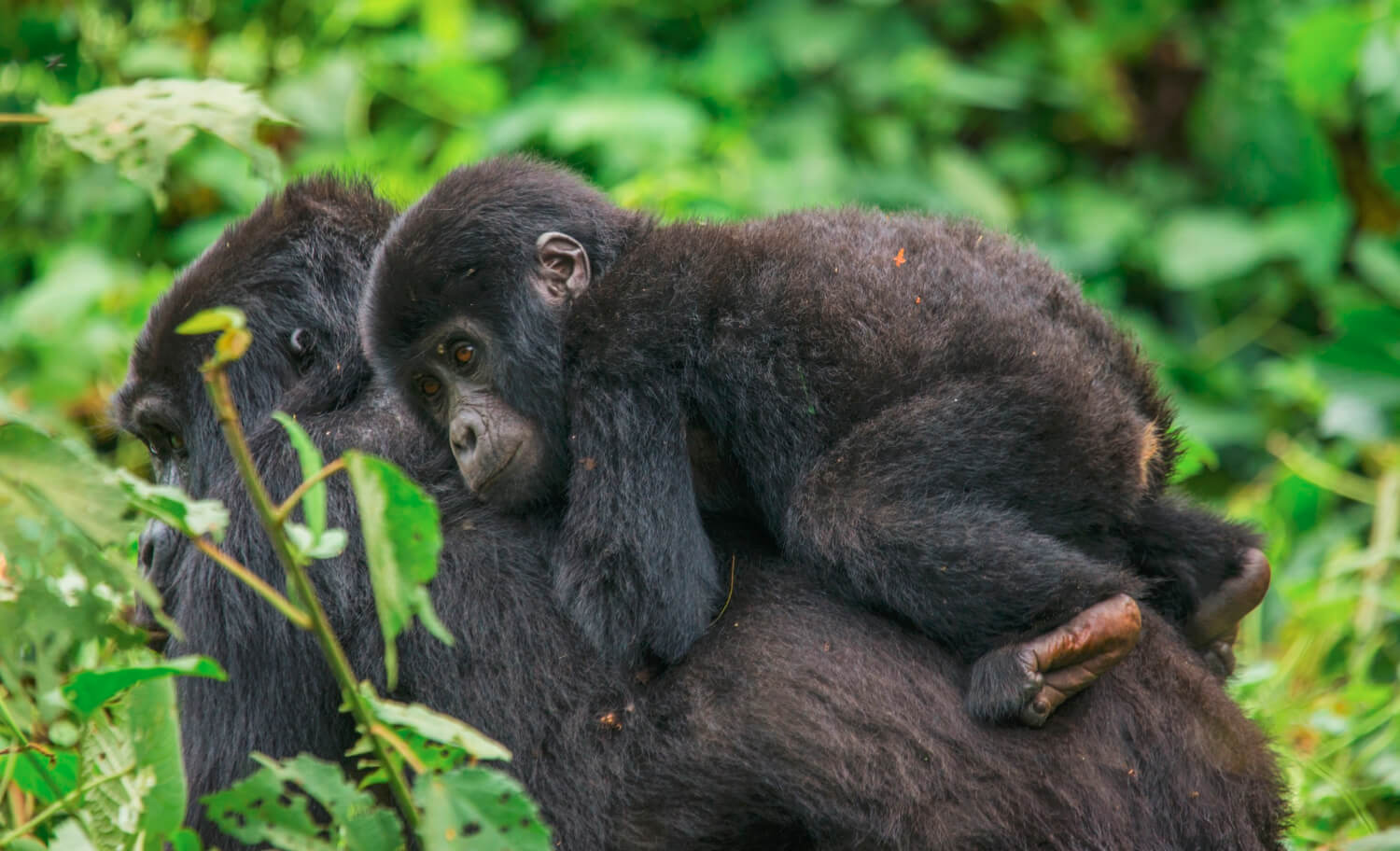
Mountain gorillas live in the forest throughout the year, and trekking continues during both wet and dry seasons. The location of a gorilla family on a particular day is more important to the length of your hike than simply looking at the weather forecast.
Visit Rwanda notes that trekking distances can vary considerably, with hikes ranging from relatively short walks to several hours depending on where the assigned family is located.
So, while dry weather can make the trail easier, it does not guarantee a shorter trek or a better gorilla encounter.
Is the Dry Season Always Better?
Not necessarily.
The dry season is easier for walking, but weather should not be the only factor you consider.
If you can only travel during a rainy month, you should not assume your gorilla experience will be disappointing. Gorilla trekking is carefully managed throughout the year, and the forest itself is part of what makes the experience special.
Some travellers actually enjoy the atmosphere of a misty, wet mountain forest more than a bright, dry day.
Your choice really comes down to what you value most.
If comfortable hiking and easier road conditions are your priority, choose a drier month.
If you have more flexible travel dates and do not mind getting wet, the rainy season can still provide a memorable experience.
What About Crowds and Availability?
Gorilla trekking is limited to a controlled number of visitors each day. Visit Rwanda states that eight tracking permits are issued per gorilla troop per day and recommends booking in advance.
This means you should not wait until the last minute simply because you are travelling outside the peak dry season.
If you have a specific date in mind, secure your permit before arranging the rest of the trip around it.
Accommodation can also become more limited during popular travel periods.
Best Time for Photography
Photography is possible throughout the year, but the conditions can be different.
During drier weather, you may find it easier to keep your camera equipment dry and move along the trails without dealing with as much mud.
Rainy weather, however, can create beautiful atmospheric conditions in the forest. Mist around the volcanic mountains and fresh green vegetation can make for memorable photographs.
Whatever month you choose, protect your camera and spare batteries from moisture.
And remember that the priority during the encounter is respecting the gorillas and following your guide’s instructions rather than trying to get the perfect photograph.
Best Time for a Gorilla and Rwanda Safari Combination
If you want to combine gorilla trekking with other parts of Rwanda, your ideal travel period may depend on the whole itinerary.
You could combine a gorilla trek in Volcanoes National Park with a visit to Kigali, a wildlife safari in Akagera National Park or a forest experience in Nyungwe National Park.
This makes it possible to turn a short gorilla trip into a much broader Rwanda holiday.
For example, a three-day itinerary can include travelling from Kigali to Volcanoes National Park, gorilla trekking the following morning and another activity such as golden monkey tracking before returning to Kigali. Visit Rwanda features a three-day itinerary built around exactly this combination.
So, When Is the Best Time for Gorilla Trekking in Rwanda?
For most first-time visitors, June to mid-September is the best time for gorilla trekking in Rwanda because the weather is generally drier and the trails tend to be easier to navigate.
December to mid-February is another good option.
But if your only available travel dates fall within the rainy seasons, you can still go. Just prepare properly for wet conditions and be ready for muddy trails.
Ultimately, there is no bad season for seeing Rwanda’s mountain gorillas. The gorillas are there year-round; what changes is the weather and how comfortable you find the trek.
Ready to choose your dates and start planning? Plan your Rwanda Gorilla Safari with Go To Africa Safaris and let us help arrange your permit, accommodation, transport and trekking experience.