Gorilla Trekking Group Size and Time Limits Explained
Gorilla trekking group size and time limits are important things to understand before booking a gorilla safari in Uganda or Rwanda. If you are planning to see mountain gorillas in their natural habitat, you might wonder how many people can visit a gorilla family at once, how long you can stay with the animals and why these restrictions are necessary.
Gorilla trekking is not like an ordinary wildlife drive where you can spend hours watching animals from your vehicle. The experience is carefully managed to protect endangered mountain gorillas from disturbance and reduce the risk of transmitting human diseases. Visitors must follow specific rules, including limits on group size, observation time and behavior around the gorillas.
Whether you are visiting Bwindi Impenetrable National Park, Mgahinga Gorilla National Park or Volcanoes National Park in Rwanda, understanding these rules will help you prepare for your trek and make the most of your time in the forest.
How Many People Are Allowed on a Gorilla Trek?
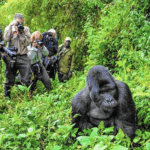
For standard mountain gorilla trekking in Uganda and Rwanda, a maximum of eight tourists may visit one habituated gorilla family at a time. The limit helps keep encounters manageable and reduces the number of people interacting with the gorillas.
This means that even if you are travelling with a large group of friends or family members, you may need to be divided into smaller groups for the trek. Each group must have the appropriate permits and follow the allocation arrangements made by park authorities.
The eight-person limit applies to visitors, not necessarily every person accompanying the trek. Park rangers, guides and trackers also take part in the experience as part of their conservation and visitor-safety duties.
Why Are Gorilla Trekking Groups Limited to Eight People?
There are several important reasons for this restriction.
Protecting gorilla health: Mountain gorillas are vulnerable to human respiratory infections and other illnesses. Limiting the number of visitors helps reduce opportunities for disease transmission.
Reducing disturbance: A smaller group is generally quieter and easier to manage. This helps prevent unnecessary disruption to the gorillas’ feeding, resting and social behavior.
Improving visitor safety: Rangers can give instructions more effectively when they are supervising a small group in dense forest, where visibility and movement may be difficult.
Supporting responsible tourism: Limiting visitor numbers helps balance tourism with the long-term conservation of mountain gorillas and their habitat.
The restriction is not simply about making the experience exclusive. It is an important conservation measure that allows visitors to observe the gorillas while limiting the impact of human presence.
How Long Can You Stay With Mountain Gorillas?
For standard gorilla trekking, visitors are generally allowed up to one hour with the gorilla family once the animals have been located.
The hour does not begin when you leave your lodge or start walking into the forest. It begins when the group reaches the gorillas and the official observation period starts.
This distinction is important because finding the gorillas can take several hours, depending on their movements, the terrain and the location of the family on that particular day.
Once your observation time is over, your guide will instruct the group to leave the gorillas and begin the return journey.
Why Is the Visit Limited to One Hour?
The one-hour limit helps protect the gorillas in several ways.
First, it limits the length of direct human exposure, reducing opportunities for disease transmission. Second, it helps prevent prolonged disturbance to the animals’ natural routines. Finally, it allows the park to manage tourism consistently while giving visitors a meaningful opportunity to observe a gorilla family.
Although one hour may sound short after travelling a long distance for the experience, it can feel surprisingly full once you are in the forest. You might see a silverback resting, young gorillas playing, a mother caring for her infant or several members of the family feeding together.
There is no guarantee that the gorillas will remain in one place or that every animal will be visible throughout the visit. Their behavior is natural, and visitors must respect that.
Does the One-Hour Limit Include the Trekking Time?
No. The standard one-hour observation period is separate from the time spent hiking to and from the gorillas.
In Uganda, a gorilla trek may take approximately two to seven hours in total, although some treks are shorter and others can be longer. The duration depends on where the gorillas are located, the terrain, weather conditions and the walking pace of the group.
You should therefore prepare for a substantial forest walk rather than planning your day around a guaranteed one-hour outing.
In Rwanda’s Volcanoes National Park, trekking duration also varies. Some groups reach the gorillas relatively quickly, while others must walk farther through mountainous terrain.
It is wise to keep the rest of your itinerary flexible on trekking day. Avoid arranging a long transfer or another time-sensitive activity immediately after your trek unless your tour operator has advised that the schedule is realistic.
Gorilla Trekking Group Size in Uganda
Uganda offers standard mountain gorilla trekking in Bwindi Impenetrable National Park and Mgahinga Gorilla National Park.
At both destinations, the standard trekking limit is eight visitors per gorilla group, with up to one hour spent observing the family.
Bwindi is divided into four main trekking sectors: Buhoma, Ruhija, Rushaga and Nkuringo. The sector associated with your permit matters when planning accommodation and transport because the park covers a large area and travel between locations can take considerable time.
Before booking your lodge, confirm the sector and trekking arrangements with your tour operator. This helps you reach the correct briefing point on time and avoid an unnecessarily early or lengthy drive.
Mgahinga offers an alternative for travelers who want to see mountain gorillas in the Virunga volcanic landscape. As with Bwindi, the trek is led by park personnel, and visitors must follow the applicable conservation rules.
Gorilla Trekking Group Size in Rwanda
Rwanda’s main mountain gorilla trekking destination is Volcanoes National Park, in the country’s northwestern region.
The standard arrangement allows a maximum of eight visitors per gorilla group, with a viewing period of up to one hour once the gorillas are found. Park staff manage the trekking arrangements and explain the rules before visitors enter the forest.
Rwanda can be a convenient option for travelers who want to combine gorilla trekking with time in Kigali or other destinations within the country. However, trekking conditions and walking times still vary, so you should not assume that every group will reach the gorillas at the same time.
What If You Want More Time With the Gorillas?
If you would like a longer experience than the standard one-hour visit, Uganda offers a separate activity known as the Gorilla Habituation Experience in the Rushaga area of Bwindi Impenetrable National Park.
This experience involves visiting a gorilla group that is still undergoing habituation, the gradual process through which gorillas become accustomed to the presence of people under controlled conditions.
The experience is different from ordinary gorilla trekking. It generally allows up to four hours with the gorillas and has a smaller visitor limit of up to four tourists, subject to the applicable permit and park arrangements.
The longer duration does not mean that visitors can approach the gorillas more closely or ignore conservation rules. The experience is conducted under the supervision of authorised personnel, and all instructions must be followed.
Because habituation permits are limited and the activity has its own booking requirements, arrange your permit in advance if you want to include it in your safari.
What Happens If the Gorillas Move Away During Your Visit?
Mountain gorillas move naturally through the forest to feed, rest and interact with one another. Their movements are not controlled for tourism, and a family may change location while visitors are observing it.
If the gorillas move, your guide will decide how the group should respond. Visitors must not chase the animals, move ahead without permission or attempt to surround them to obtain better photographs.
Your guide may direct you to remain in place, reposition safely or leave the area, depending on the situation. The priority is always the welfare of the gorillas and the safety of everyone present.