Mahali Mzuri – Olare Motorogi Conservancy Camp
Mahali Mzuri is a high-end tented camp in Kenya’s Olare Motorogi Conservancy, within the wider Masai Mara ecosystem. The camp combines striking contemporary design with the feeling of being deep in the African wilderness, creating a safari experience that is both stylish and closely connected to nature.
With only twelve tents, Mahali Mzuri offers a more private atmosphere than many larger safari properties. Its location inside a private conservancy is another major attraction, allowing guests to enjoy a quieter safari environment with lower vehicle density and opportunities for off-road game drives.
The camp is particularly appealing to travelers looking for big-cat encounters, exclusive wildlife viewing and a luxury safari experience away from some of the busier areas of the main reserve.
Accommodation at Mahali Mzuri
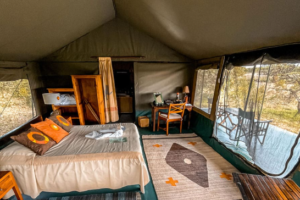
Mahali Mzuri has twelve spacious tents, giving the camp an intimate character. The accommodation combines the traditional feeling of a safari tent with a distinctive modern design.
The sculptural architecture makes the camp stand out while still fitting naturally into its surroundings. Guests can enjoy the feeling of being in the bush without giving up the comfort expected from a high-end safari property.
The smaller number of tents also means the camp feels relatively private. Travelers can enjoy their stay without the atmosphere of a large resort.
For couples and honeymooners, this combination of privacy and wilderness can be particularly attractive. Families and small groups can also appreciate having a more personal safari environment.
The Olare Motorogi Conservancy
One of Mahali Mzuri’s biggest advantages is its location within Olare Motorogi Conservancy.
Private conservancies provide a different safari experience from the main Masai Mara Reserve. They generally have fewer vehicles and can offer a quieter environment for wildlife viewing.
The lower vehicle density means guests may spend more time watching an animal without being surrounded by numerous safari vehicles.
The conservancy also allows activities such as off-road driving in designated areas, giving guides greater flexibility when approaching wildlife while following conservation guidelines.
This can be especially valuable for travelers interested in photography and close observation of animal behavior.
Big Cats of the Mara
The Masai Mara is famous for its big cats, and Mahali Mzuri provides excellent opportunities to search for lions, cheetahs and leopards.
Lions can often be found resting during the heat of the day before becoming more active later. Cheetahs are particularly suited to the open grasslands, where they can use their speed to hunt.
Leopards are more elusive and may require patience and experienced guiding to locate. Finding one hidden in vegetation or resting in a tree can become one of the most memorable moments of a safari.
Wildlife sightings can never be guaranteed, but the rich ecosystem and experienced guides give visitors plenty of opportunities to explore.
Off-Road Game Drives
Off-road driving is one of the advantages of staying in a private conservancy such as Olare Motorogi.
Rather than being restricted to established roads in the same way as many public reserves, guides can use designated off-road routes where permitted. This provides opportunities to approach certain wildlife situations more closely and observe animals from different angles.
Off-road driving can also help guides position vehicles for photography while minimizing unnecessary disturbance to animals.
The experience feels more flexible and personalized than a standard safari drive, which is one reason private conservancy stays are popular with luxury travelers.
A Quieter Safari Experience
The lower vehicle density in the conservancy can make a significant difference to the atmosphere of a game drive.
Instead of spending much of the safari surrounded by other vehicles, guests can sometimes enjoy wildlife encounters with fewer people nearby.
This creates more opportunities to listen to the sounds of the landscape and observe animal behavior without as much distraction.
For travelers who value privacy and a sense of wilderness, the quieter environment is one of Mahali Mzuri’s strongest attractions.
Design and the Wilderness
Mahali Mzuri’s sculptural design gives it a contemporary identity while maintaining a connection with the surrounding landscape.
The architecture provides a contrast between modern shapes and the natural environment of the Mara. Rather than hiding the wilderness, the camp is designed around it.
Guests can enjoy the scenery between game drives and experience the changing light, sounds and atmosphere of the conservancy from the camp.
This combination of design and nature makes Mahali Mzuri particularly appealing to travelers who want something beyond a traditional safari camp.
The Great Migration
The wider Masai Mara ecosystem plays an important role in the Great Migration, when vast herds of wildebeest and zebras move through the Serengeti-Mara landscape.
The timing of the migration changes each year, so there is no single guaranteed date for seeing the herds. However, visiting during the migration period can provide dramatic wildlife experiences.
Large herds attract predators, making this period particularly interesting for travelers hoping to see big cats hunting or following migrating prey.
Even outside the migration season, the Mara ecosystem supports resident wildlife and can provide excellent safari experiences throughout much of the year.
Who Should Stay at Mahali Mzuri?
Mahali Mzuri is best suited to travelers looking for a high-end and relatively exclusive safari.
Couples and honeymooners can enjoy the intimate atmosphere, while photographers and wildlife enthusiasts may appreciate the lower vehicle density and off-road opportunities.
It is also a strong choice for visitors who want to experience the Masai Mara from a private conservancy rather than staying solely within the main reserve.
Travelers who enjoy architecture and design may find the camp especially interesting because of its distinctive sculptural style.
Best Time to Visit
The Masai Mara can be visited throughout the year. The period associated with the Great Migration is particularly popular, although exact migration timing varies annually.
The drier periods can offer good wildlife viewing, while wetter months bring greener landscapes and fewer visitors in some areas.
Travelers should pack lightweight safari clothing, comfortable shoes, sunscreen, insect repellent, a hat, sunglasses, binoculars and a camera. Early morning drives can be cool, so a warm layer is recommended.
Combining Mahali Mzuri with a Kenya Safari
Mahali Mzuri can be combined with other Kenyan destinations to create a more diverse itinerary.
Travelers can add Amboseli National Park for its famous elephant herds and views toward Mount Kilimanjaro. Lake Nakuru can provide opportunities for wildlife and bird watching, while Samburu offers a very different landscape and wildlife experience in northern Kenya.
For visitors who have limited time, combining Mahali Mzuri with a few days in the Mara region can also provide a focused luxury safari centered on big cats and the conservancy experience.
Book Your Stay at Mahali Mzuri
Mahali Mzuri combines luxury accommodation, distinctive design and an exclusive wildlife setting in Kenya’s Olare Motorogi Conservancy. With only twelve tents and access to a low-vehicle-density environment, the camp offers a more private alternative to busy safari areas.
Its opportunities for off-road game drives and big-cat viewing make it particularly appealing to wildlife enthusiasts, while the sculptural design adds a modern character to the traditional safari experience.
Whether you are planning a honeymoon, a photography-focused trip or a luxury Masai Mara adventure, Mahali Mzuri offers an intimate way to experience one of Kenya’s most famous wildlife regions.