Rwanda Gorilla Trekking Rules and Regulations
Gorilla trekking in Rwanda is a carefully managed experience. You are entering the natural habitat of endangered mountain gorillas, so there are rules in place to protect both the animals and the people visiting them.
Knowing the Rwanda gorilla trekking rules and regulations before your safari makes the experience easier and helps ensure that tourism continues to support gorilla conservation.
The rules are not meant to take away from the experience. In fact, they help visitors observe the gorillas safely while giving the animals the space they need to behave naturally.
Follow Your Guide’s Instructions
The most important rule during a gorilla trek is simple: listen to your guides and follow their instructions.
Experienced guides and trackers know how to approach the gorilla families and how to react to different situations in the forest. They will tell you where to stand, when to move and how close you can safely get.
Do not leave the group or approach a gorilla on your own.
The forest can be difficult to navigate, and your guides are there not only to help you find the gorillas but also to keep the encounter safe and respectful.
Keep a Safe Distance From the Gorillas
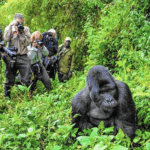
Visitors are expected to maintain a safe distance from the gorillas.
Although being close to a mountain gorilla is one of the most memorable parts of the experience, these are still wild animals. Give them space and never attempt to touch, feed or chase them.
If a gorilla approaches you, remain calm and follow your guide’s instructions rather than trying to move closer or reach out.
The aim is to observe the animals without disturbing their normal behaviour.
Do Not Touch the Gorillas
Even if a gorilla comes close to you, do not attempt to touch it.
Mountain gorillas are wild animals and should not be treated like domestic animals. Physical contact also creates unnecessary health risks for both gorillas and humans.
Simply watch and enjoy the encounter.
You may find that a gorilla walks past you or comes surprisingly close. Resist the temptation to reach out for a photograph or try to interact with it.
Never Feed the Gorillas
Feeding gorillas is strictly prohibited.
They have their own natural diet and should never become dependent on food from visitors. Feeding wildlife can also change animal behaviour and create health and safety problems.
Keep your food packed away during the trek and follow your guide’s instructions about when and where you can eat.
Do Not Litter in the Forest
Everything you bring into the forest should come back out with you.
Do not throw food wrappers, tissues, bottles or any other rubbish onto the trail. Even small pieces of litter can damage the environment or be harmful to wildlife.
If you need to carry snacks or other items, keep your rubbish in your backpack until you return to an appropriate disposal point.
Respecting the forest is just as important as respecting the gorillas.
Avoid Flash Photography
Photography is one of the highlights of gorilla trekking, but it needs to be done responsibly.
Avoid using flash photography around the gorillas because sudden flashes can disturb them.
Keep your camera or phone ready before approaching the gorilla family, but follow your guide’s instructions about where to stand and how to behave.
Do not allow photography to distract you from the experience. Sometimes the best moments are the ones you simply watch rather than trying to capture on camera.
Keep Your Voice Down
Gorillas communicate with a variety of sounds and body language, and loud human voices can disturb them.
Keep conversations quiet while you are near the gorilla family. Avoid shouting, playing loud music or making sudden noises.
If you need to communicate with another member of your group, speak quietly.
A calm environment allows you to observe the gorillas behaving more naturally.
Do Not Make Sudden Movements
When you are close to the gorillas, avoid sudden movements.
Stand or sit quietly and let the animals move naturally around you. If a gorilla changes direction or approaches your group, listen to your guide rather than reacting suddenly.
This is particularly important around silverbacks, which are powerful animals and may react to unfamiliar behaviour.
Your guide will explain how to respond if a gorilla comes particularly close.
Follow Health Guidelines
Gorillas are susceptible to some human illnesses, which makes health precautions an important part of responsible trekking.
If you are feeling unwell, especially if you have symptoms of a contagious respiratory illness, inform your safari operator or park authorities rather than attempting to hide the symptoms.
Do not sneeze or cough directly towards the gorillas. If you need to cough or sneeze, turn away and follow the guidance provided by your trek leaders.
Visitors should also maintain good hygiene and avoid unnecessary physical contact with the animals.
These precautions help protect a population that is particularly vulnerable to human-borne diseases.
Do Not Trek if You Are Sick
If you are ill before your trek, tell your tour operator or park staff.
This is not simply about your own comfort. Because humans and mountain gorillas can transmit certain illnesses to one another, visiting while sick could put the gorilla family at risk.
It is better to discuss the situation with your operator and follow the current park guidance than to put the animals or other visitors at risk.
Stay With Your Group
Never wander away from the trekking group.
The forest can be thick, steep and difficult to navigate. Your guides and trackers are responsible for leading you safely through the area.
Stay behind or beside your guide and remain with the group throughout the trek.
If you need to stop for any reason, let your guide know.
Respect the One-Hour Viewing Period
Once your group reaches the gorillas, visitors are permitted a limited period to observe them.
The standard gorilla trekking experience allows one hour with the gorilla family. When your guide tells you that the viewing time has ended, leave with the group.
Do not try to extend the encounter or remain behind.
This system allows different groups to visit the gorillas while limiting the amount of human contact each gorilla family experiences.
Respect the Environment of Volcanoes National Park
Gorilla trekking takes place in Volcanoes National Park, a protected mountain environment that is home to gorillas and other wildlife.
Do not damage plants, remove vegetation, disturb wildlife or take natural objects from the park.
Stay on the route indicated by your guides and avoid unnecessary disturbance to the forest.
The beautiful surroundings are part of the experience, so leave them as you found them.
Respect the Gorilla Permit Requirements
You need a valid gorilla trekking permit to participate in the experience.
Rwanda’s gorilla permits are issued for specific trekking dates and groups, and visitors must follow the conditions attached to their permit.
The standard international gorilla permit is currently US$1,500 per person, while different rates may apply to eligible Rwandan, East African Community and African residents/citizens under current policies.
Our [Rwanda Gorilla Permit] guide explains the permit cost, booking process and other important requirements in more detail.
Minimum Age Requirement
Rwanda currently sets the minimum age for standard gorilla trekking at 15 years old.
Families travelling with younger children should therefore plan other activities for them rather than assuming that everyone in the group can participate in the gorilla trek.
Always confirm the current requirements when booking because park policies and special arrangements can change.
Quick Rwanda Gorilla Trekking Rules Checklist
Before entering Volcanoes National Park, remember to:
- Follow your guide’s instructions
- Keep a respectful distance from gorillas
- Never touch or feed the animals
- Keep your voice low
- Avoid sudden movements
- Do not use flash photography
- Do not litter
- Stay with your trekking group
- Do not visit if you are sick
- Respect the forest and other wildlife
- Follow the permitted viewing time
- Keep your camera and personal belongings secure