Gorilla Trekking Altitude and Terrain: What to Know
Gorilla trekking altitude and terrain are two important factors to understand before planning a mountain gorilla safari in Uganda or Rwanda. The experience takes you into mountainous forests where trails can be steep, slippery, muddy and covered with thick vegetation. Depending on where the gorillas are located, you might walk uphill for hours, cross uneven ground or descend into a forested valley before reaching the family.
You do not need to be a professional hiker to enjoy gorilla trekking, but knowing what to expect can help you prepare physically, choose suitable equipment and enjoy the experience with greater confidence. Whether you are visiting Bwindi Impenetrable National Park, Mgahinga Gorilla National Park or Volcanoes National Park, understanding the altitude and terrain will help you arrive better prepared.
How High Is Gorilla Trekking?
Mountain gorilla trekking takes place at relatively high elevations compared with many ordinary walking destinations. The exact altitude depends on the national park, the trekking sector and the location of the gorillas on the day of your visit.
Bwindi Impenetrable National Park in southwestern Uganda generally lies at elevations of approximately 1,160 to 2,607 metres above sea level. This wide range means that some trails pass through lower forest valleys while others climb into much higher sections of the mountains.
Mgahinga Gorilla National Park, also in southwestern Uganda, forms part of the Virunga volcanic mountain range. Its forested slopes rise towards volcanic peaks, making altitude and steep gradients important considerations for visitors.
In Rwanda, Volcanoes National Park protects mountain gorilla habitat across the Virunga Mountains. The park’s elevation is generally around 2,400 to 4,507 metres, although gorilla treks take place at varying elevations within the forest rather than necessarily reaching the highest peaks.
These figures describe the wider parks, not the exact altitude of every gorilla trek. Your actual walking route may remain at a lower elevation or climb substantially higher, depending on where the gorilla family is feeding and moving.
Does High Altitude Make Gorilla Trekking More Difficult?
Altitude can make physical activity feel more demanding, particularly for travellers who are not accustomed to exercising at higher elevations.
As altitude increases, the air contains less oxygen per breath. Your body can compensate to a degree, but you may notice that you breathe more heavily, tire faster or need more frequent breaks when walking uphill.
This does not mean every gorilla trek will be exhausting. Many visitors complete their treks comfortably, while others find the combination of elevation, steep slopes and humid forest conditions challenging.
Your experience will depend on several factors:
- Fitness level: Regular walking and moderate cardiovascular exercise can help prepare you for sustained activity.
- Trekking altitude: Higher routes may feel more demanding, particularly if you are not acclimatised.
- Terrain: Steep climbs and descents can be more tiring than walking on relatively level ground.
- Weather: Heat, humidity, rain and muddy trails can increase the effort required.
- Gorilla location: The distance you walk depends on where the family is found that day.
If you have concerns about altitude, breathing difficulties or an existing medical condition, speak with a healthcare professional before travelling. Do not assume that being physically fit completely eliminates the effects of altitude.
What Is the Terrain Like During Gorilla Trekking?
The word “trekking” can make people imagine a clearly marked mountain trail, but the reality of gorilla trekking is often more varied.
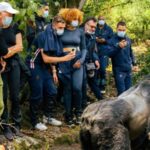
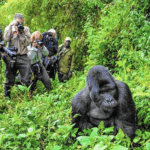
Much of the experience takes place inside dense tropical forest. Trails may be narrow, uneven and partly obscured by vegetation. In some places, you may walk along established paths; in others, your ranger may need to guide the group through thicker vegetation to reach the gorillas.
Here are some of the conditions you should expect.
1. Steep hills and slopes
Bwindi and the Virunga region have mountainous landscapes, so uphill and downhill walking is common. Some sections may involve climbing over roots, stepping across small obstacles or carefully navigating sloping ground.
The challenge is not always the distance. A relatively short trek with a steep climb can feel harder than a longer walk over gentler terrain.
Take your time and follow your ranger’s instructions. There is no advantage in rushing ahead and exhausting yourself before reaching the gorillas.
2. Muddy and slippery trails
Rain can fall at any time in these forest environments, even during periods that are generally considered drier. As a result, trails can become muddy and slippery.
Descending a muddy slope may require more care than climbing it. Proper footwear with good grip is essential, and trekking poles can provide extra stability for visitors who are comfortable using them.
Avoid smooth-soled trainers or ordinary sandals. They offer limited protection and can make walking on wet ground more difficult.
3. Thick vegetation
Bwindi is known for its dense vegetation, which contributes to the feeling of exploring a wild, relatively untouched forest. Depending on the route, you may encounter tangled vines, shrubs, roots and branches.
Your ranger guides the group and helps everyone navigate the terrain safely. Long trousers, a long-sleeved shirt and gardening-style gloves can help protect your skin from scratches and stinging vegetation.
Do not move away from the group to find a shortcut or take a photograph. Follow the designated route and the instructions given by your guides.
4. Uneven ground and exposed roots
Forest floors are rarely smooth. Roots, rocks, fallen branches and small depressions can make walking difficult, particularly when the ground is wet or covered with leaves.
Watch where you place your feet, especially when moving downhill. A steady pace is safer than trying to keep up with the fastest person in your group.
5. Changing weather
Mountain forests can experience cool mornings, mist, sunshine and sudden rain within the same day. The weather may also feel different at the start of the trek compared with higher sections of the forest.
Dress in layers so you can adjust to changing conditions. A waterproof jacket, a comfortable daypack and a dry bag or waterproof cover for your belongings are useful additions.
Which Gorilla Trekking Destination Has the Hardest Terrain?
There is no universal answer because trekking difficulty depends on the location of the gorillas, weather, route and individual fitness.
However, understanding the general characteristics of each destination can help you decide where to go.
Bwindi Impenetrable National Park, Uganda
Bwindi is famous for its steep ridges, deep valleys and dense vegetation. Some treks involve substantial climbing, while others may be shorter and less demanding.
The park has four main trekking sectors: Buhoma, Ruhija, Rushaga and Nkuringo. Their terrain and accommodation options differ, but the name of a sector alone cannot guarantee an easy trek.
Nkuringo is often associated with steep terrain, while other areas can also involve challenging climbs depending on the gorilla family’s location. When booking, tell your safari operator about your fitness and mobility so you can discuss the most appropriate options.
Mgahinga Gorilla National Park, Uganda
Mgahinga lies within the Virunga volcanic landscape. Its mountainous setting means visitors should be prepared for uphill walking and changing elevations.
The forest and surrounding volcanic scenery make this an appealing destination for travellers who enjoy mountain environments. However, a gorilla trek is not the same as climbing one of the park’s volcanic peaks. Your route depends on the gorilla family and the arrangements made by the park authorities.
Volcanoes National Park, Rwanda
Volcanoes National Park protects mountain gorilla habitat across the Virunga Mountains. The landscape includes steep volcanic slopes, bamboo vegetation and montane forest.
Some treks can be relatively manageable, while others involve extended uphill walking. A gorilla family found close to the starting point may require less walking than one that has moved deeper into the mountains.
Rwanda’s reputation for well-organised tourism does not mean every gorilla trek is physically easy. Visitors should prepare for genuine outdoor hiking conditions.
How Fit Do You Need to Be for Gorilla Trekking?
You do not need to be an athlete, but a reasonable level of fitness will make the experience more comfortable.
If you can walk for extended periods, manage uneven paths and handle moderate uphill sections, you have a useful starting point. However, even fit travellers can find a trek challenging when the gorillas are far away or the ground is particularly muddy.
In the weeks before your safari, consider building up your stamina with regular walks. Include gentle hills or stairs if these are available to you, and gradually increase the duration of your walks.
Practising with the shoes you intend to wear is also helpful. New boots can cause blisters, and discovering this halfway through a forest trek is far from ideal.
If you have limited mobility or find steep slopes difficult, discuss your circumstances with your safari operator well before your visit. Depending on the destination and availability, assistance such as hiring a porter may make the experience easier, although it cannot remove every physical challenge.
Does Gorilla Trekking Cause Altitude Sickness?
Altitude sickness is possible at higher elevations, but the risk varies with altitude, how quickly you ascend and your individual susceptibility.
Many gorilla trekking routes take place below the elevations most commonly associated with acute mountain sickness, but some routes reach higher ground, especially in the Virunga region. Do not rely on the park’s overall elevation alone to estimate your personal risk.
Symptoms of altitude sickness can include headache, nausea, dizziness, unusual fatigue and loss of appetite. These symptoms should not be ignored, particularly if they appear after ascending to higher ground.
Tell your guide immediately if you begin feeling unwell. Severe breathlessness at rest, confusion, difficulty walking straight or a worsening severe headache require urgent medical assessment. Do not continue the trek in the hope that symptoms will disappear.
Travellers with concerns about altitude should discuss their itinerary with a healthcare professional before departure, especially if they have heart or lung conditions or a history of altitude-related illness.
A porter can carry your bag and may offer a helping hand on difficult sections. Porters are local workers who provide assistance during the trek; they are different from the park rangers responsible for guiding and protecting visitors and gorillas.
Can You Request an Easier Gorilla Trek?
You can explain your preferences and physical limitations when booking, but an easy trek cannot be guaranteed.
Some parks may consider visitor fitness and mobility when allocating gorilla families, subject to operational arrangements and availability. Discuss this with your safari operator in advance and ask what can realistically be arranged.
Remember that the gorillas are wild animals. Their movements cannot be controlled to provide a shorter route, and a family that was nearby the previous day may be much farther away on your trekking day.
If you have serious mobility limitations, ask about current assistance arrangements and whether the activity is suitable for your needs before paying for a permit.